
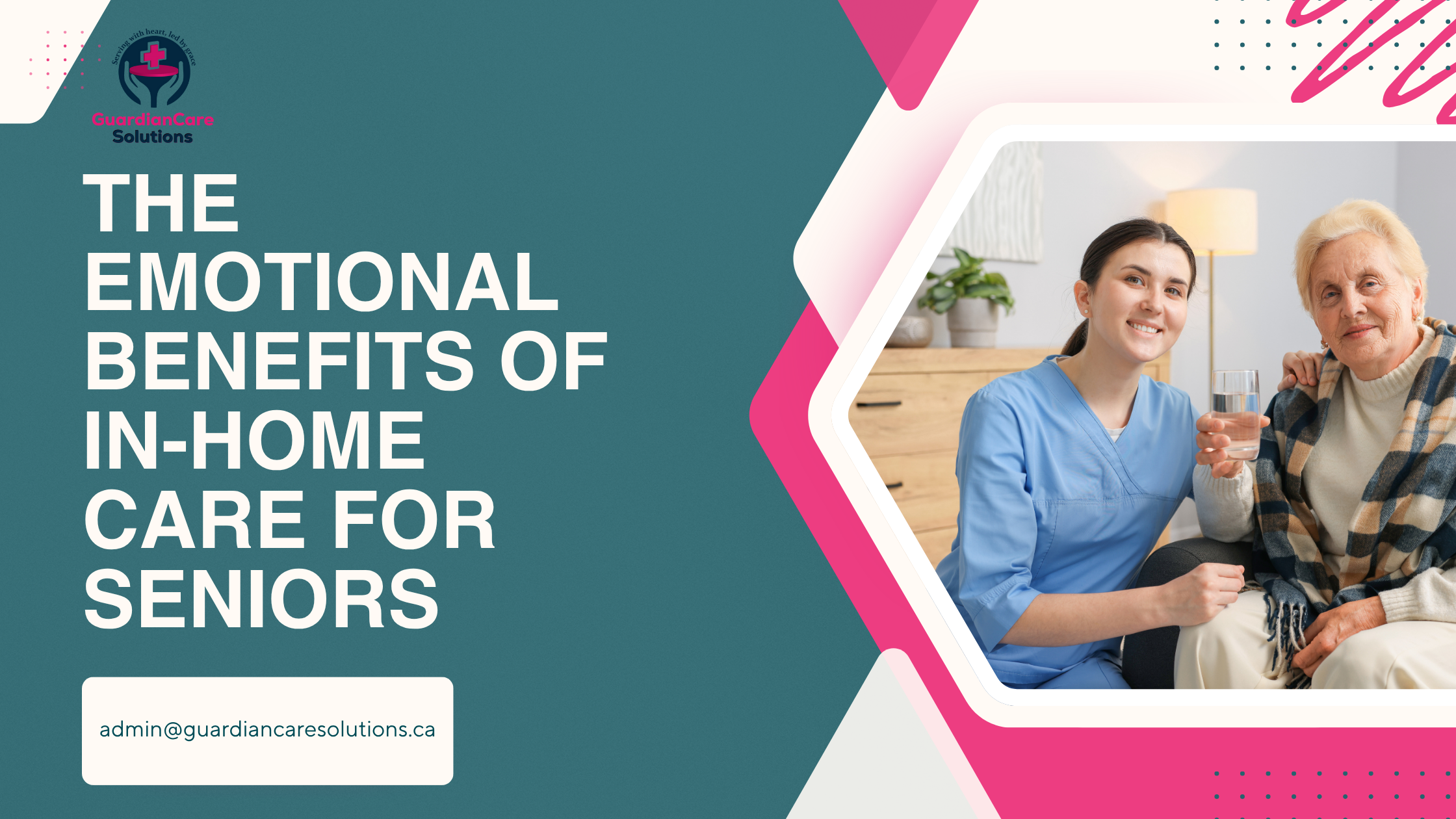
When people think of home care for seniors, their minds often go straight to physical needs—help with meals, bathing, medication, or mobility. But here’s the thing: senior care is about so much more than daily tasks. It’s about creating a supportive environment where older adults feel seen, heard, and valued.
The truth is, emotional well-being is just as important as physical health. In fact, the two go hand in hand. At Guardian Care Solutions, in-home care is not only about assisting with life’s essentials but also about providing companionship, dignity, and peace of mind. Let’s dive into the often-overlooked emotional benefits of in-home senior care—because happiness at home matters.
Familiarity Brings Comfort
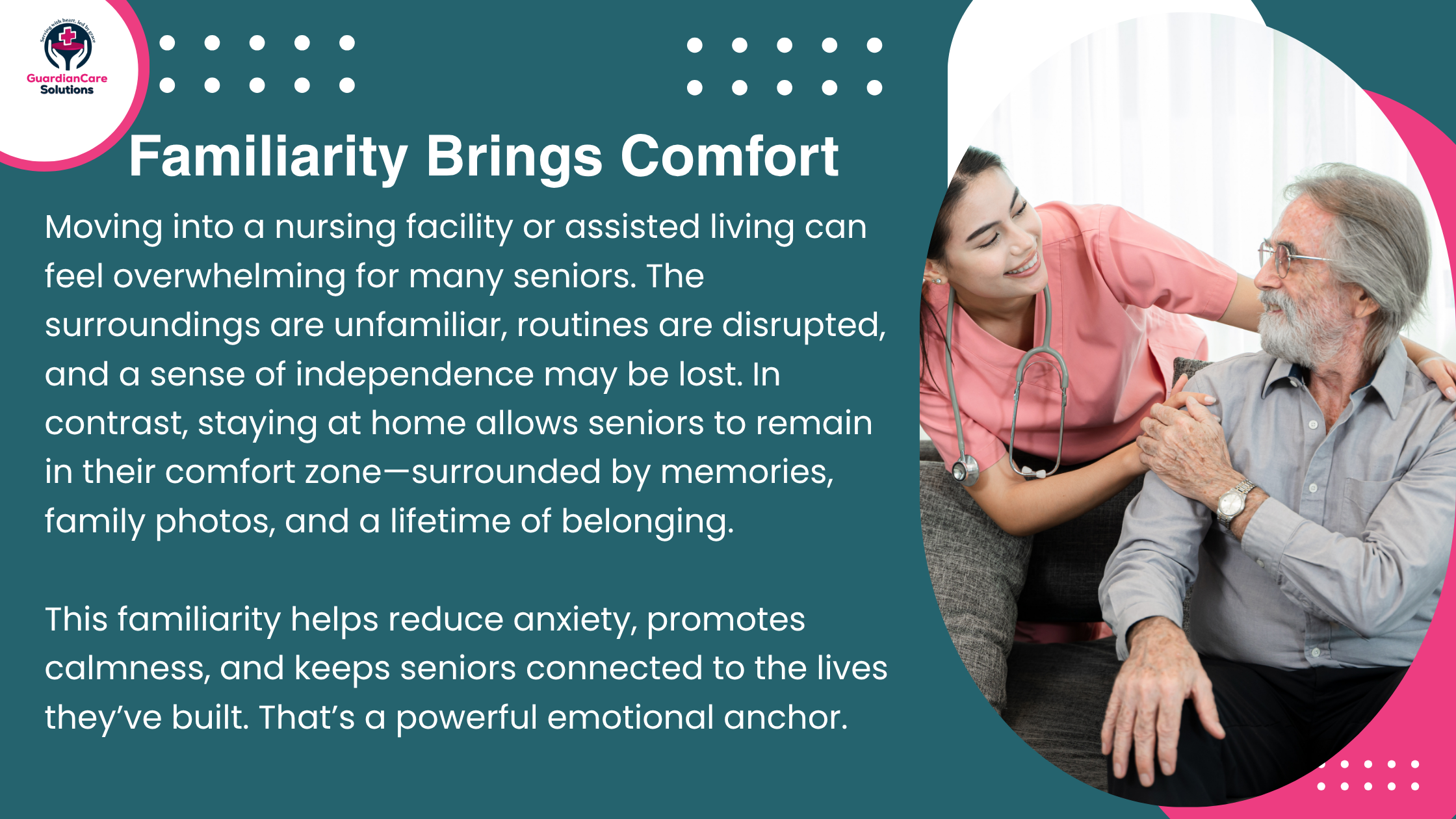
Moving into a nursing facility or assisted living can feel overwhelming for many seniors. The surroundings are unfamiliar, routines are disrupted, and a sense of independence may be lost. In contrast, staying at home allows seniors to remain in their comfort zone—surrounded by memories, family photos, and a lifetime of belonging.
This familiarity helps reduce anxiety, promotes calmness, and keeps seniors connected to the lives they’ve built. That’s a powerful emotional anchor.
Companionship Fights Loneliness
Loneliness is often called the “silent epidemic” among older adults. Research has shown that prolonged loneliness can be as damaging to health as smoking 15 cigarettes a day.
With in-home caregivers, seniors gain not just helpers but also companions. Sharing a meal, chatting about the past, or enjoying a walk together can significantly reduce feelings of isolation. At Guardian Care Solutions, companionship care is designed to bring joy, laughter, and genuine connection back into seniors’ lives.
Respecting Independence and Dignity
Here’s a tricky balance: families want to make sure their loved ones are safe, but seniors want to keep their independence. In-home care is the perfect middle ground. Caregivers provide support without stripping away autonomy.
For example, instead of doing everything for them, caregivers assist with tasks—allowing seniors to stay engaged in their daily routines. That way, seniors maintain a sense of control, which is key for emotional health.
Reducing Family Stress
Let’s be real: caregiving can be emotionally draining for families. Many adult children juggle careers, parenting, and caregiving responsibilities. The constant worry about whether Mom or Dad is safe at home can be overwhelming.
Having a professional caregiver in place gives families peace of mind. They know their loved one is cared for, not just physically but emotionally too. This reduces guilt and tension, strengthening family bonds.
Boosting Mental Stimulation
Staying mentally active is just as important as keeping the body moving. In-home caregivers often engage seniors in activities like:
- Reading aloud together
- Playing memory-boosting games
- Going for light walks
- Encouraging hobbies like painting, puzzles, or gardening
These activities spark joy and keep the brain active, reducing risks of cognitive decline and enhancing emotional health.
Building Trust and Friendship
Unlike institutional settings, in-home care allows seniors to form close, trusting relationships with their caregivers. This consistent one-on-one care builds a sense of safety and companionship that feels more like family than service. Over time, caregivers often become trusted confidants—someone seniors look forward to seeing each day.
The Ripple Effect on Families
It’s not just seniors who benefit emotionally. Families gain reassurance, reduced stress, and more quality time with their loved ones. Instead of spending every moment worrying about chores and health needs, families can focus on enjoying meaningful moments together—sharing stories, celebrating milestones, and simply being present.
Wrapping It Up
At Guardian Care Solutions, we know that home care is more than just helping with daily tasks—it’s about enhancing quality of life. The emotional benefits of in-home care are profound: reduced loneliness, greater independence, stronger family bonds, and overall happiness.
When seniors feel supported emotionally, everything else—health, safety, and well-being—naturally improves.
FAQs About Emotional Benefits of In-Home Care
- How does in-home care improve a senior’s mental health?
By providing companionship, reducing loneliness, and encouraging activities, in-home care keeps seniors mentally engaged and emotionally supported.
- What are the emotional benefits of companionship for seniors?
Companionship provides social connection, reduces feelings of isolation, and gives seniors a sense of belonging and joy.
- Does home care help with senior loneliness?
Absolutely. Professional caregivers spend quality time with seniors, offering not only assistance but also meaningful conversation and friendship.
- How does in-home care reduce family stress?
Families gain peace of mind knowing their loved one is cared for, which lessens guilt, worry, and the emotional strain of constant caregiving.
- Can home care services be customized for emotional well-being?
Yes, services can be tailored to each senior’s preferences, hobbies, and personality—ensuring care that supports both physical and emotional health.